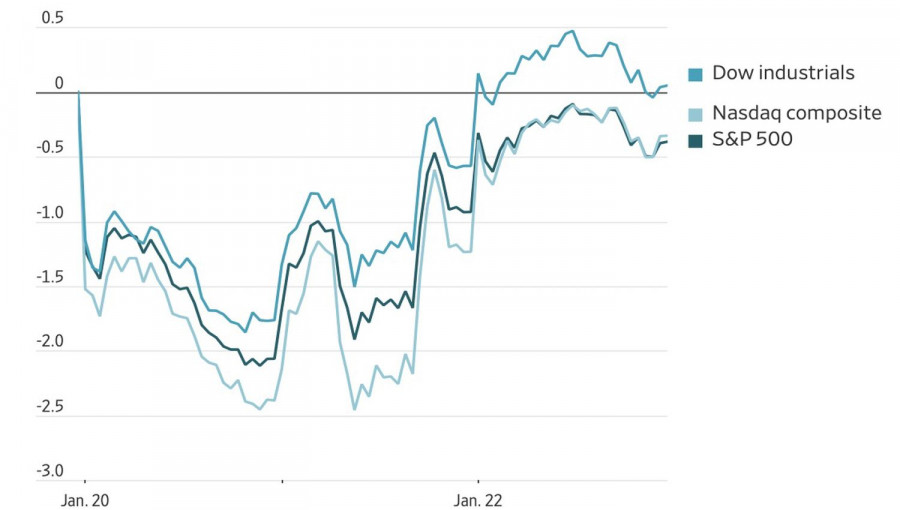
When the global economy is in the midst of the largest cycle of rate cuts by central banks since 1998, geopolitical risks need to be very significant to knock the S&P 500 down. Donald Trump's tariff threats to Europe followed by a quick retreat by the US president sounded like child's play to the broad index. The sell?off was bought quickly, and strong macro data allowed the equity rally to continue.
US Stock Indices Dynamics
US GDP accelerated in Q3 from 3.8% to 4.4%, not 4.3% as the initial reading showed. Despite the shutdown, the Atlanta Fed's leading indicator points to GDP accelerating to 5.4% in October-December. Initial jobless claims rose to 200,000, missing forecasts but still consistent with labour market stabilization. The personal consumption expenditures index, the Fed's preferred inflation gauge, anchored at 2.8%.
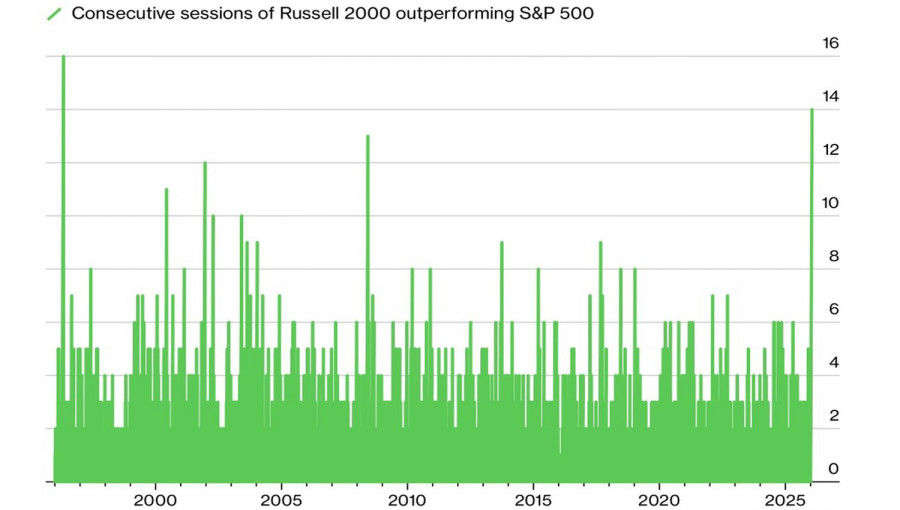
The economy is strong, the labour market is recovering, and inflation remains high — all signs of solid domestic demand. What else is needed to keep the equity rally going? Small?cap stocks, which are sensitive to the health of the US economy, naturally attract heightened investor attention. The Russell 2000 has outperformed the S&P 500 for 14 consecutive trading sessions, marking its best run since 1996.
Russell 2000's Winning Streak vs. S&P 500
The Nasdaq Composite looks even stronger this time thanks to positive news from NVIDIA, reports of Anthropic doubling revenue since last summer, new funding for OpenAI, and Alibaba's plans to boost investment. One driver of rotation was investor concern that the tech giants would not be able to generate returns commensurate with their massive investments. Anthropic's example suggests otherwise. And if companies are spending, it means they have the cash.
According to JP Morgan, the risk of foreign investors shunning the US equity market is minimal. Previously, Donald Trump warned Europe of retaliation if its residents tried to pull money out of the United States. Nasdaq estimates that over the past year, non?residents have invested about $3 trillion into US equities because this market is the deepest and most liquid in the world.
After moving from a "sell America" stance to TACO, last year's rapid S&P 500 surge risks repeating. At the same time, growing interest among foreign investors in hedging currency risk could weaken the US dollar.
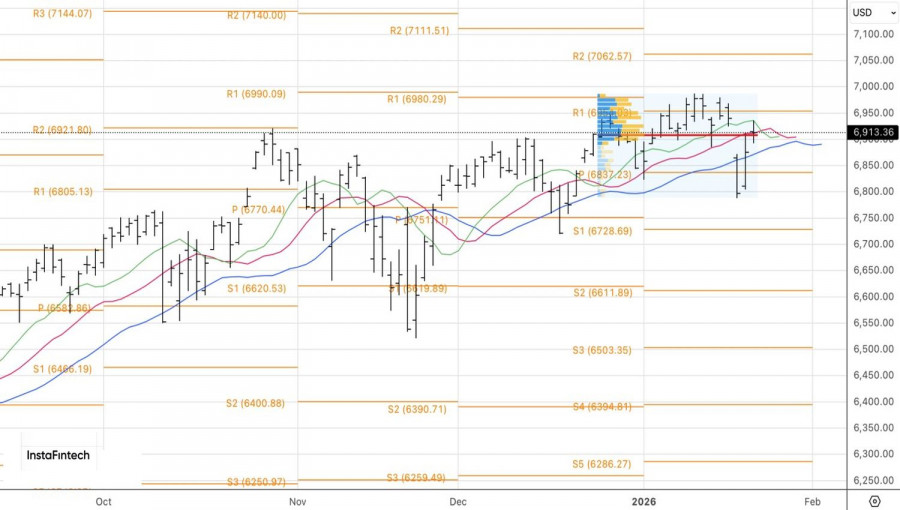
As for the technical S&P 500 outlook, the daily chart shows that the S&P 500 is fiercely contesting the fair value level at 6,910. A bullish win followed by a new local high at 6,935 would justify building or adding to long positions. Conversely, a drop below 6,893 would increase the risk of a pullback and provide grounds for short?term selling.